Stargazing in Schools: Igniting Student Curiosity Beyond the Classroom
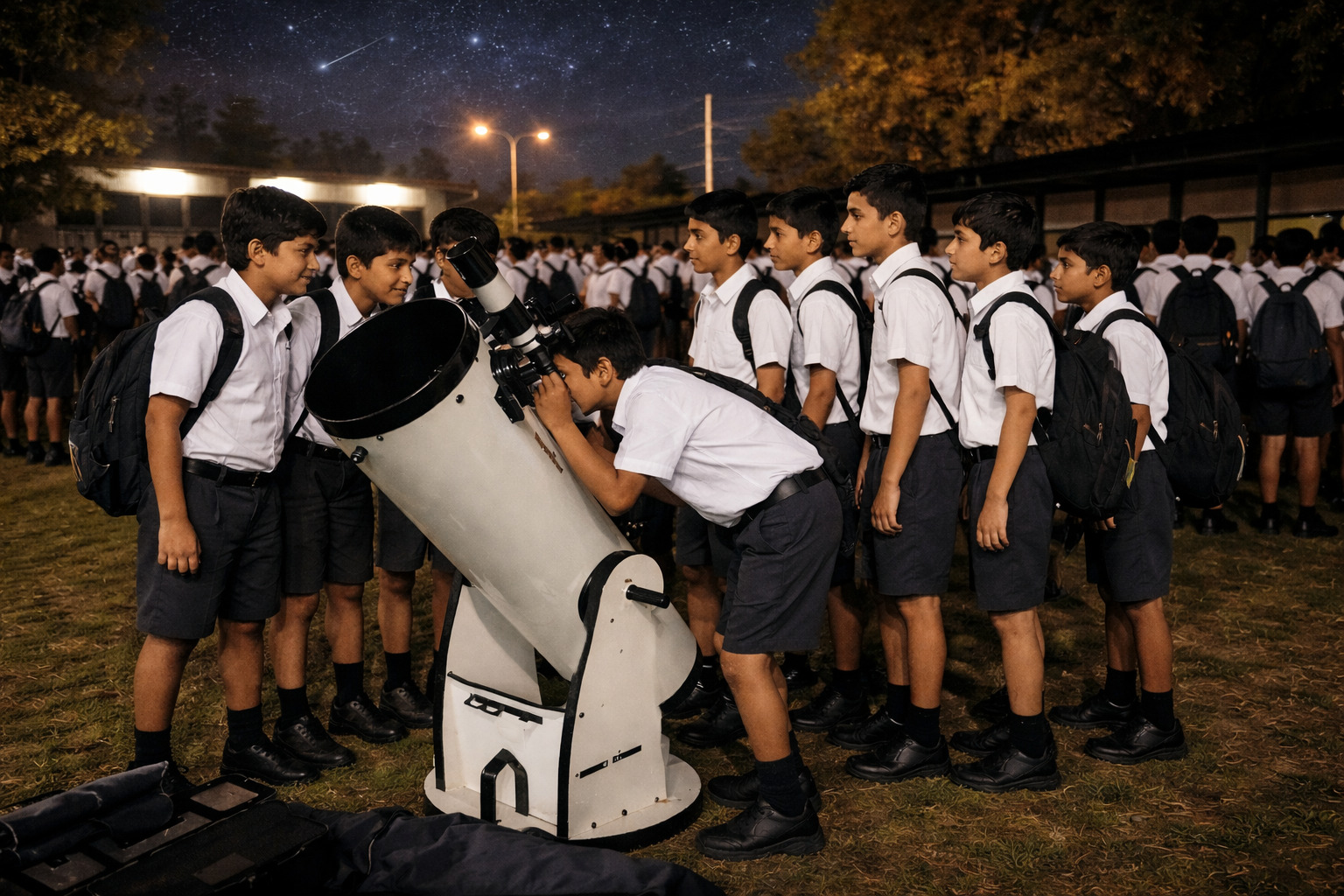
The night sky has long been a source of fascination and exploration. Even before the development of technology and space travel, humans have been looking up at the night sky to understand time, direction, and the very essence of life itself. Today, Stargazing in schools takes this same source of fascination and brings it right into the classroom itself. Instead of just teaching concepts of astronomy through textbooks, Stargazing in Schools is giving students the opportunity to explore the sky in a much more meaningful and lasting way.
In a world where screens have become the dominant focus of students, the simple act of pointing them towards the real sky or a very realistic simulation of it is a powerful and highly effective tool of education. It slows them down, encourages observation, and invites reflection. More importantly, it brings scientific education back in touch with curiosity, which is the true key to all discovery.
The Educational Value of Stargazing in Schools
The addition of Stargazing in Schools is more than just a consideration for planning an evening activity; it is a means of completely turning around the way that students approach knowledge. When students are taken outside to look at the stars or participate in a guided viewing session inside a dome planetarium, they are transformed from passive recipients of information into active participants.
Astronomy is a field that combines imagination with observation. Students learn to identify patterns in the sky, track the phases of the Moon, and describe why some stars appear brighter than others. This is a process that builds observation skills and patience, which are qualities that are not just useful in science class but in problem-solving in every area of life.
Turning Observation into Understanding
Observation is one of the most essential skills in scientific research. By engaging in structured stargazing activities, students learn to observe, compare, and record their observations. They begin to realize the minute variations in the position of stars or patterns over time.
A Dome planetarium can further strengthen the process by offering structured simulations of the movement of celestial bodies. Unlike picture learning, projection learning reveals how the Earth actually rotates, why there are seasons, and how planetary alignment actually occurs. Students can see cause-and-effect relationships in action in real time, making scientific phenomena much more concrete.
Encouraging Thoughtful Questions
The most wonderful thing about Stargazing in Schools is the quality of questions that are asked. By observing the surface of the Moon or a simulated meteor shower in a Dome Planetarium, students are naturally curious. They begin to ask:
- How do scientists calculate the age of stars?
- What lies beyond our galaxy?
- Why does the sky look differently from different parts of the world?
- How do spacecraft travel such enormous distances?
These questions encourage critical thinking. Students do not simply commit to memory the answers to questions. They engage in discussions, consider possibilities, and evaluate competing explanations. The sky is no longer a distant horizon but a springboard for discovery.
Expanding Learning Beyond Classroom Boundaries
Classrooms are designed for structure and routine. Structure is necessary, but learning can also occur through experiences of wonder and discovery. Stargazing in Schools brings about a change of setting that sparks curiosity and excitement.
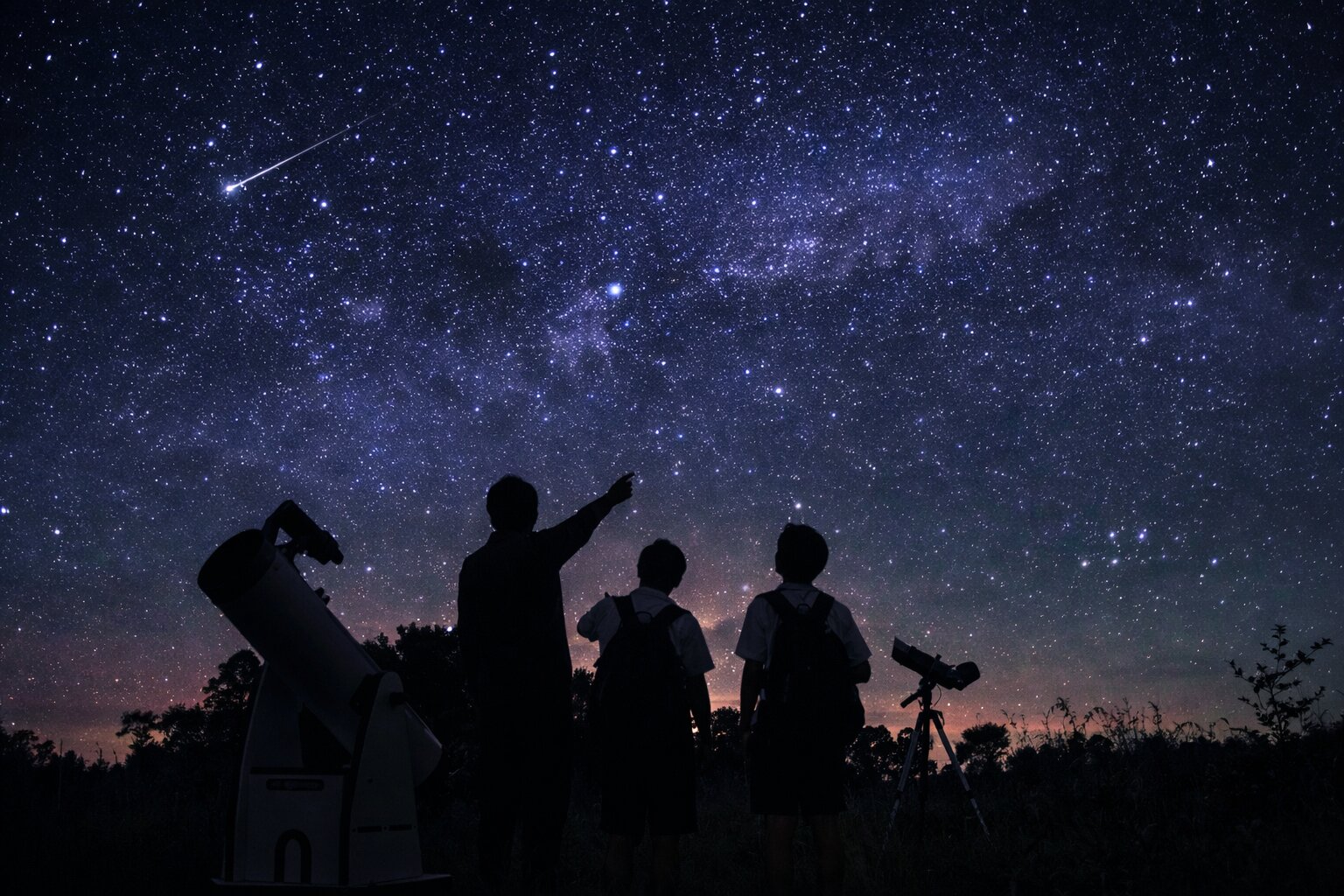
Night sky observation activities offer a shared experience for students and teachers. The activity of standing together under the open sky sparks teamwork as students come together to spot the constellations or spot the visible planets. This sense of shared discovery is what sparks confidence.
Accessibility Through Innovation
Not all schools have the opportunity to gaze at the night sky due to weather conditions and city lighting. This has resulted in the growing adoption of dome planetarium systems in schools. A portable dome planetarium system is capable of projecting the night sky clearly, allowing all students to discover the magic of the night sky regardless of their location.
Through the use of projection technology, students are able to witness eclipses, planetary motion, and space missions without having to travel too far from school. This is crucial since it ensures that astronomy education is made accessible and standardized. More importantly, it allows teachers to plan stargazing sessions in a structured manner with classroom learning.
Building Perspective and Inspiration
Just by observing the enormity of space, students are often able to develop a different perspective about their own world. Stargazing in Schools encourages students to develop a perspective. Realizing that there are billions of planets like Earth helps to instill a sense of humility and appreciation about our environment.
This broader perspective might have an influence on the perspectives of responsibility, cooperation, and global awareness. Students realize that scientific discovery is a human activity that goes beyond boundaries. Learning about the universe at a young age might also encourage a desire to study or explore related fields of astronomy, research, or technology in school at a later age—not as a requirement, but as a source of inspiration.
Transform Learning Through Stargazing in Schools
Learning is most effective when it is a balance of knowledge and curiosity. Stargazing in schools is a program that strikes a perfect balance by making the study of astronomy from a book chapter to a reality. Whether it is observing the actual night sky or watching the movements of celestial bodies in a Dome planetarium, students are actually involved in a learning experience that is real and memorable.
By making stargazing programs a part of the school curriculum, teachers can actually give students the opportunity to observe, question, and be inspired. These activities will take learning beyond the classroom walls and remind students that discovery begins with looking up.

Dr. Vinod Kumar is a leading space education mentor, NASA-certified MARS program coach and ISRO tutor, inspiring curiosity through innovative STEM initiatives, impactful internships, and transformative programs reaching over one million students across 2,000 schools.