Portable Dome Planetarium for Schools: Features and Advantages
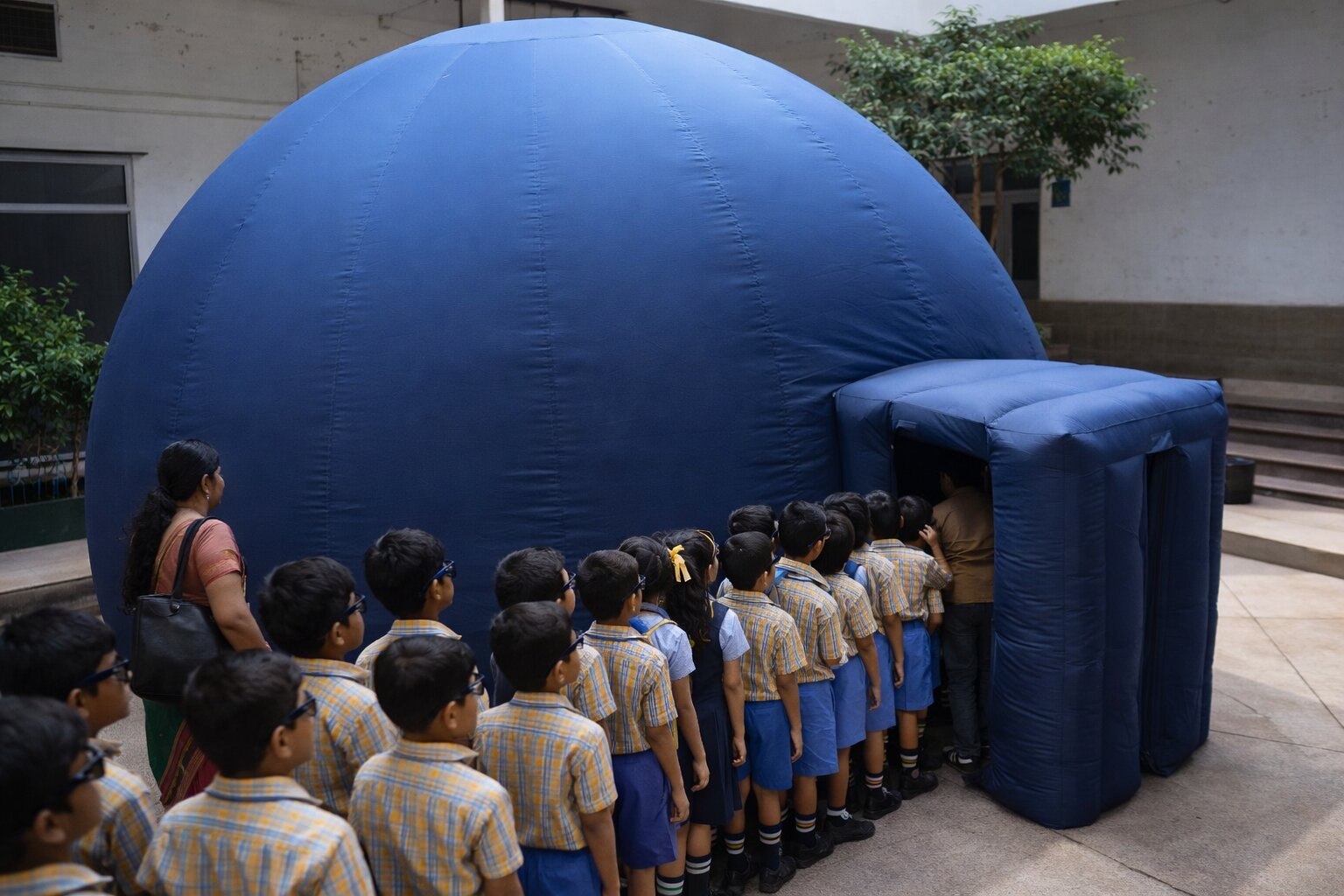
The modern education system is gradually shifting away from textbooks and classroom lectures. Educational institutions are increasingly turning to experiential learning tools that enhance comprehension, engagement, and retention. One of the most effective technological advancements in science education is the Dome planetarium – a mobile and interactive tool that brings space exploration right into the classrooms.
This technology, specifically designed for educational institutions, is an effective tool that turns a school auditorium or hall into a 360-degree space theatre. Students can learn about astronomy, space phenomena, and space science in a highly engaging and interactive manner. Below are the important features and academic benefits of this technology that make it an effective addition to modern educational institutions.
What is a Portable Dome Planetarium?
A portable dome planetarium is an inflatable temporary structure erected inside an educational institution’s campus to provide immersive astronomy shows. Unlike fixed structures that require permanent construction, this mobile structure can be conveniently set up in school auditoriums, multipurpose halls, or large classrooms.
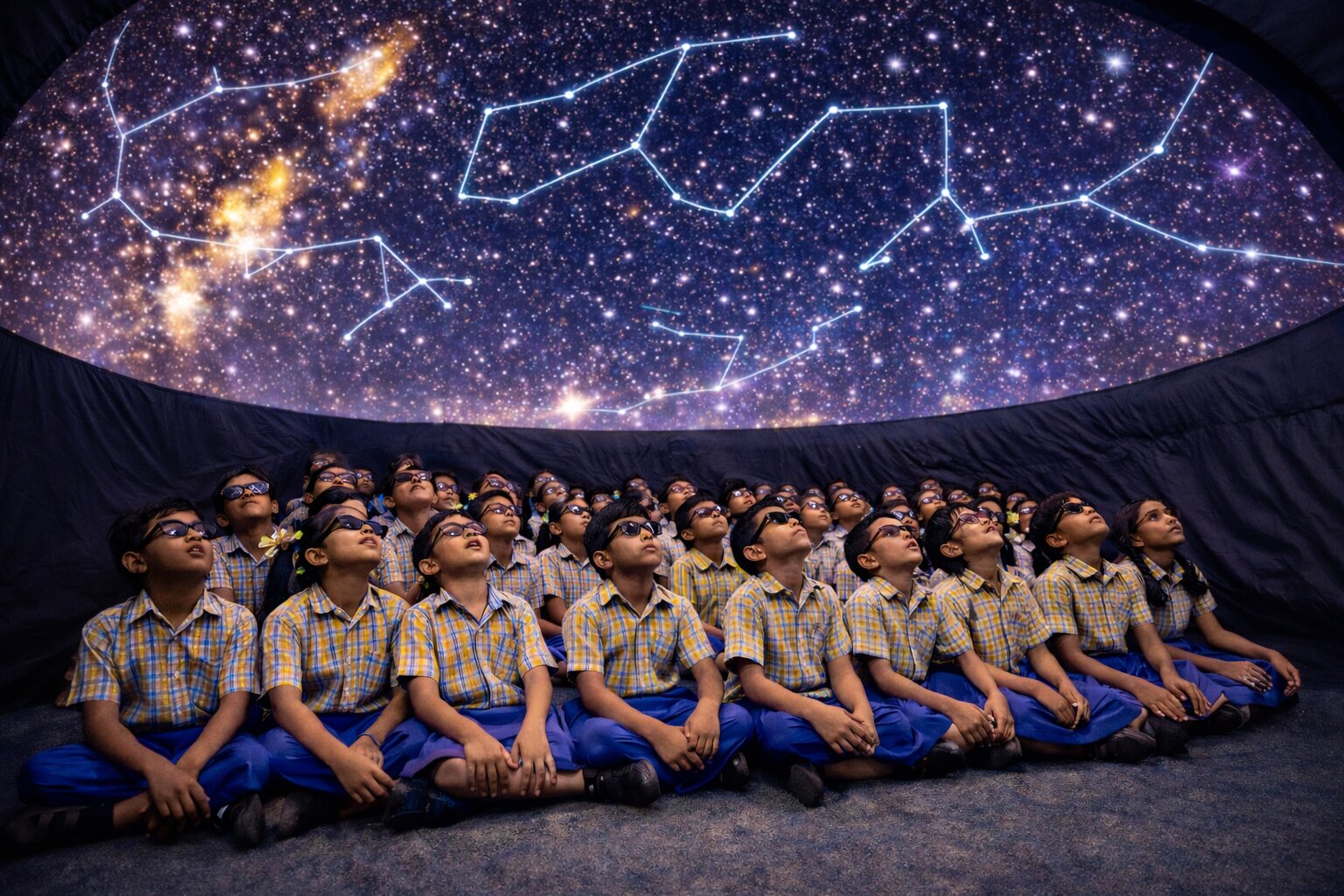
Inside the dome, students enjoy a 360-degree projection system that simulates:
- The solar system
- Planetary motion
- Constellations
- Galaxy evolution
- Space missions and exploration
This visual environment engages students in understanding complex scientific concepts more effectively while keeping them actively involved throughout the process.
Key Features of a Dome Planetarium for Schools
1. 360-Degree Immersive Projection
The most distinguishing feature of this learning environment is the full-dome projection system. Unlike viewing content on a flat screen, students are treated to visuals that surround them, making them feel as if they are traveling in space. This enhances the visual understanding of concepts such as rotation, revolution, eclipses, and planetary orbits.
2. Portable and Easy Installation
One of the greatest advantages of this learning environment is its portability. The inflatable dome takes minimal time to set up and can be easily packed away after the educational sessions. This means that schools can offer immersive educational experiences without having to invest in a dedicated learning environment.
3. Curriculum-Aligned Educational Content
Educational sessions at the planetarium are designed to be aligned with the school curriculum. Sessions are designed to support the CBSE and state board science curriculum, environmental science, physics concepts such as gravity and light, and astronomy chapters in school textbooks.
4. Age-Appropriate Learning Modules
Learning modules can be tailored for different age groups. Younger students learn about basic concepts like day and night, Sun and Moon, and simple constellations. Older students learn about advanced concepts like black holes, atmospheres of planets, space exploration, and introductory astrophysics. This is very useful for students of primary, middle, and senior schools.
5. Interactive and Guided Sessions
Learning sessions are done with expert narration and interactive sessions. Students are encouraged to watch and learn, ask questions, and connect the simulations shown in class to what is learned in the classroom. This interactive method helps increase attention span and helps retain knowledge much better than the normal classroom lecture method.
Advantages of a Dome Planetarium for Schools
1. Better Conceptual Understanding
Astronomy is a subject that deals with abstract and macro-level concepts, which are difficult to comprehend. The immersive projection system helps simulate the motion of planets, galaxies, and celestial bodies in a dynamic way, making abstract concepts concrete and clear.
2. Boost in STEM Education
Space simulation experiences trigger curiosity and encourage students to pursue a career in science, technology, engineering, and mathematics (STEM). Observing space simulations, similar to those undertaken by bodies such as ISRO and NASA, makes science an exciting, tangible, and attainable subject.
3. Equal Opportunities for Advanced Learning
It is not possible for every school to have a dedicated planetarium. Moreover, educational trips can be costly and time-consuming. The portable system eliminates the disadvantages of traveling and ensures that high-quality science education is accessible to rural, urban, government, and private schools alike.
4. Learning by Experience
Students remember experiences more than classroom lectures. The interactive experience provided by the dome ensures emotional involvement, and the learning experience is etched in their minds long after the event is over. Such events become the highlight of the academic year.
5. Cost-Effective Learning Solution
Setting up a planetarium is a costly affair. Organizing events where the dome is used periodically enables schools to provide high educational value at a very low cost.
Why Schools Should Consider It?
In today’s technology-driven world, experiential learning is necessary. Students are highly receptive to visual and interactive learning processes. Immersive space sessions fill the gap between learning concepts from textbooks and understanding them in reality by transforming science classes into exciting adventures where students can experience astronomical events right before their eyes.
For schools looking to improve science education, encourage curiosity, and utilize contemporary learning tools, including such interactive programs in their curriculum is a progressive and intelligent move.
Conclusions
A Portable Dome planetarium is more than just an educational program; it is a revolutionary learning experience. With its immersive projection, alignment with the curriculum, portability, and interactive delivery, it offers significant academic and developmental value.
By incorporating this cutting-edge space learning system into school programs, schools can enhance science education, ignite the spark of innovation in young minds, and provide them with an unforgettable learning experience. For schools looking for an exciting and effective academic enhancement, it is a great addition to the educational calendar.

Dr. Vinod Kumar is a leading space education mentor, NASA-certified MARS program coach and ISRO tutor, inspiring curiosity through innovative STEM initiatives, impactful internships, and transformative programs reaching over one million students across 2,000 schools.