Moon Festival for Schools: A Powerful Way to Promote Astronomy Education
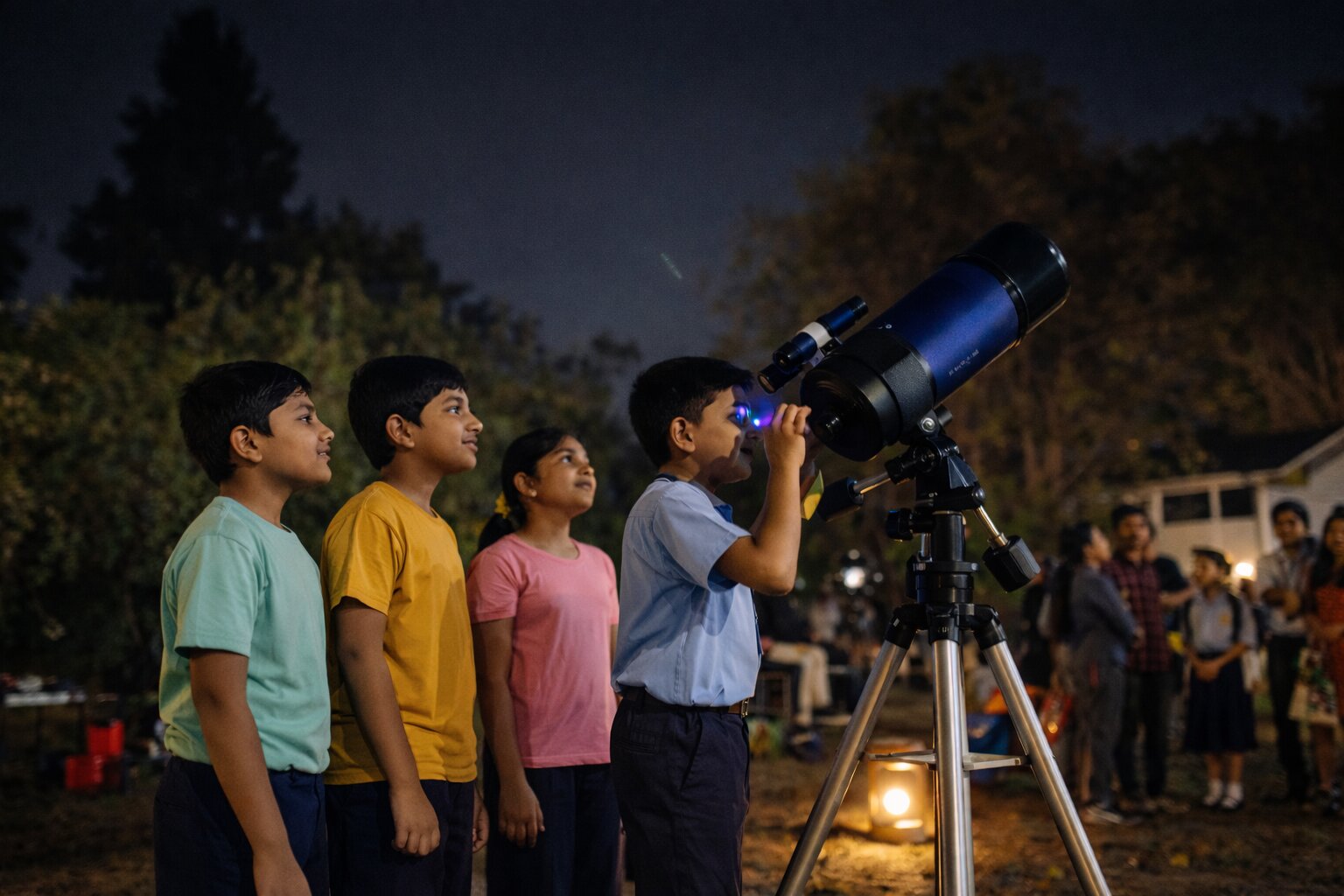
Moon Festival for Schools is a fun way to teach astronomy to kids. When students learn about the Moon and space, it is much more helpful if they can experience things visually. This makes it easier for them to understand things such as the Moon phases, how eclipses occur, and the gravitational effect of the Moon. A Moon festival in school is a unique way to get students excited about space science.
This kind of event is not just about learning, but it also teaches students to work together and think about new ideas. By doing fun activities and learning new things, students can learn about the Moon and space in a way that is exciting and easy to understand. This helps students learn about science and how to work with others.
Why Learning about the Moon in School is Important?
A Moon festival in school can be quite an essential step towards building interest in astronomy. It helps students learn about how the Moon affects the weather on Earth. This gets students excited about space science as a whole and fully engages them in the learning process.
Getting Students Interested in Science
Kids often look up at the night sky and wonder about the Moon. They ask questions like why the Moon looks different every night and how astronauts walked on it. This is a great opportunity for teachers to explain things in a way that is fun and interactive.
Students can learn about the Moon by doing experiments and discussing topics like:
- Why the Moon looks different every night
- What happens during a lunar eclipse
- How gravity works
Instead of just memorizing facts, students can learn by doing and seeing things for themselves. This helps them understand better and remember concepts for a longer time.
Teaching Students about Space Missions
Learning about space missions is a great way to get students excited about space. For example, they can learn about Apollo 11 when Neil Armstrong became the first person to walk on the Moon. They can also learn about India’s Chandrayaan-3 mission, which was a great success.
When students learn about these missions, they understand that space exploration is constantly evolving with new and exciting discoveries. This inspires them to think about science as a way to achieve big goals and possibly pursue exciting careers in the future.
Getting Students to Participate and Be Creative
A Moon festival in school is a fun way to get students involved and excited about learning. Schools can organize activities such as:
- Conducting science classes with models of the Moon
- Assigning projects like creating Moon craters
- Organizing poster contests about the Moon’s effect on Earth’s oceans
- Storytelling sessions about astronomy
These activities help students work together, present their ideas, and build confidence. When learning is enjoyable, students understand science concepts more deeply and develop better communication skills.
Enhancing Learning Experiences Through a Mobile Planetarium
While classroom instruction forms the foundation of education, a Mobile Planetarium offers an enhanced and immersive learning experience. By bringing space exploration directly to the school campus, it makes astronomy more accessible, engaging, and enjoyable for students.
Learning in a Fun and Interactive Way
Inside a dome, students can see and experience the night sky in a whole new way. They can take a virtual trip to the Moon, observe what the surface looks like, and learn how the Moon moves.
- How the Moon orbits the Earth
- What the surface of the Moon looks like
- What happened during missions to the Moon
Because students can visually experience these concepts, they understand them better. This exciting approach makes learning more effective and memorable.
Making Sure Everyone Has Access to Good Education
Not all schools have the equipment or facilities to teach advanced science concepts. A Mobile Planetarium Show can bring quality education to any school, no matter where it is located. This ensures that all students can enjoy fun and interactive learning experiences regardless of their location.
It also helps students see science, technology, engineering, and math (STEM) as interesting and valuable subjects.
Helping Students Learn and Grow
Learning about space and science at a young age can inspire students to explore more and aim higher in their academic journey. During a Moon festival, when students see how rockets work, how satellites orbit, and how missions to the Moon are planned, they begin to understand that science is real, practical, and achievable.
Such experiences can motivate students to pursue careers as engineers, astrophysicists, or other professionals in scientific fields. Early inspiration through meaningful initiatives like a Moon festival helps them develop clear goals and confidently plan for their future.
Making a Lasting Impact on Education
When students learn through hands-on experiences and active participation, their understanding becomes deeper and more lasting. During a Moon festival, combining classroom instruction with interactive activities helps schools improve knowledge retention while increasing enthusiasm for science.
This experiential approach not only strengthens memory and comprehension but also encourages curiosity and critical thinking. By integrating a Moon festival into academic programs, schools can make learning more impactful and memorable.
Conclusion
Having a Moon Festival in school is an effective way to get students excited about science and learning. By organizing fun activities, sharing stories about space missions, and providing interactive learning experiences, schools can make astronomy education enjoyable and inspiring.
When students learn about the Moon and space in a fun and interactive way, it becomes more than just textbook knowledge. It turns into an exciting journey of discovery that builds curiosity, creativity, and confidence, helping shape the scientists and innovators of tomorrow.

Dr. Vinod Kumar is a leading space education mentor, NASA-certified MARS program coach and ISRO tutor, inspiring curiosity through innovative STEM initiatives, impactful internships, and transformative programs reaching over one million students across 2,000 schools.